Our Approach to Teaching & Learning
At Curie Preschool, children learn through Curie's own STEAM++ Curriculum, strengthened by research-based early childhood resources and practices. Our goal is to support the whole child — academically, socially, emotionally, physically, and creatively — through purposeful play, intentional teaching, inquiry, hands-on exploration, and strong teacher-child relationships.

"Children are not vessels to be filled, but fires to be kindled."
— The philosophy behind every Curie classroom
Our Curriculum Model
A Layered Approach to Early Learning
Curie's educational model brings together our own STEAM++ Curriculum with respected research-based early childhood resources. Rather than relying on one curriculum alone, our teachers draw from complementary approaches to create engaging, developmentally appropriate learning experiences. Children are active participants in learning — not passive recipients of information.
The Curie Difference
Our STEAM++ Curriculum + Research-Based Resources
At Curie Preschool, we don't rely on a single off-the-shelf curriculum. Our educational program is built around Curie's own STEAM++ Curriculum and strengthened by research-based early childhood resources and practices. This layered approach allows Curie teachers to preserve the hands-on, inquiry-driven STEAM++ learning experience that distinguishes Curie while incorporating additional research-based practices that support children's development, teacher-child interactions, purposeful play, school readiness, and individual growth.
Curie Foundation
Curie's STEAM++ Curriculum
Curie's own hands-on, inquiry-driven educational framework integrating science, technology, engineering, art, mathematics, literacy, movement, creativity, nature exploration, social-emotional learning, collaboration, and problem-solving.
All programs
Research-Based Resource
STREAMin³
Research-based early childhood curriculum resources and practices developed by UVA CASTL and being implemented in applicable Early Preschool, Preschool, and Pre-K classrooms to complement and strengthen Curie's STEAM++ Curriculum.
Early Preschool • Preschool • Pre-K
Early Preschool Resource
Creative Curriculum
Research-based early childhood resources being incorporated into Curie's toddler and Early Preschool programs. Teachers have completed training, materials have been received, and implementation is underway at both campuses.
Early Preschool
Research-Based Resource
STREAMin³ at Curie
Curie Preschool is implementing STREAMin³, a comprehensive early childhood curriculum developed by the University of Virginia's Center for Advanced Study of Teaching and Learning (CASTL), in applicable Early Preschool, Preschool, and Pre-Kindergarten classrooms. STREAMin³ adds research-based resources and practices that complement Curie's STEAM++ Curriculum and support intentional teaching, responsive teacher-child interactions, purposeful learning experiences, and whole-child development.
STREAMin³ is applied in applicable Early Preschool, Preschool, and Pre-Kindergarten classrooms.
STREAMin³ complements Curie's STEAM++ Curriculum across:
Toddler & Early Preschool
Creative Curriculum for Our Youngest Learners
Curie Preschool's Herndon campus was selected to participate in Fairfax County's Creative Curriculum Initiative. Teachers have completed Creative Curriculum training, materials have been received, and Curie is now incorporating these research-based resources into our toddler and Early Preschool programs at both the Herndon and South Riding / Chantilly campuses.
Creative Curriculum is being incorporated into our toddler and Early Preschool program (ages 18 months–3 years) as a supporting research-based resource that complements Curie's STEAM++ Curriculum for our youngest learners.
Standards
Virginia-Aligned Learning
Curie's early childhood programs support developmentally appropriate learning consistent with Virginia's Early Learning and Development Standards and broader school-readiness expectations. School readiness at Curie means whole-child development — not early introduction of Kindergarten academics.
Kindergarten
Curie's Kindergarten program is a separate academic program aligned with the Virginia Standards of Learning, covering English/language arts, phonics and literacy, writing, mathematics, science, social studies, inquiry and problem-solving, creativity, physical development, and social-emotional growth.
Learn about our Kindergarten program →Curie's Curriculum
Curie's STEAM++ Curriculum
Curie's own hands-on, inquiry-driven educational framework integrates age-appropriate experiences across science, technology, engineering, art, mathematics, literacy, music and movement, nature exploration, social-emotional learning, collaboration, and problem-solving — through purposeful play, investigation, experimentation, building, creating, questioning, storytelling, discussion, and teacher-guided learning experiences.
Science
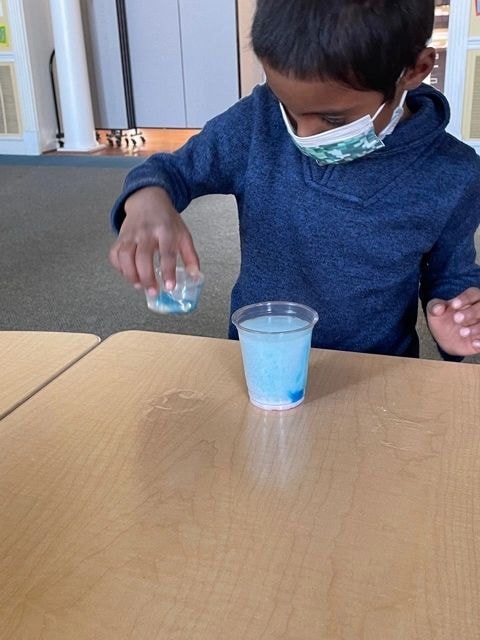
Observation, questioning, experimentation, nature, prediction, investigation, and discovery. Children become curious scientists through hands-on exploration of the world around them.
- Sink & float experiments
- Plant life cycles
- Weather observation
- Nature investigation
Technology
Developmentally appropriate technology experiences and computational thinking, balanced with hands-on, social, physical, and screen-free learning. Technology use is purposeful and age-appropriate.
- Computational thinking
- Screen-free sequencing games
- Problem-solving tools
- Digital storytelling
Engineering
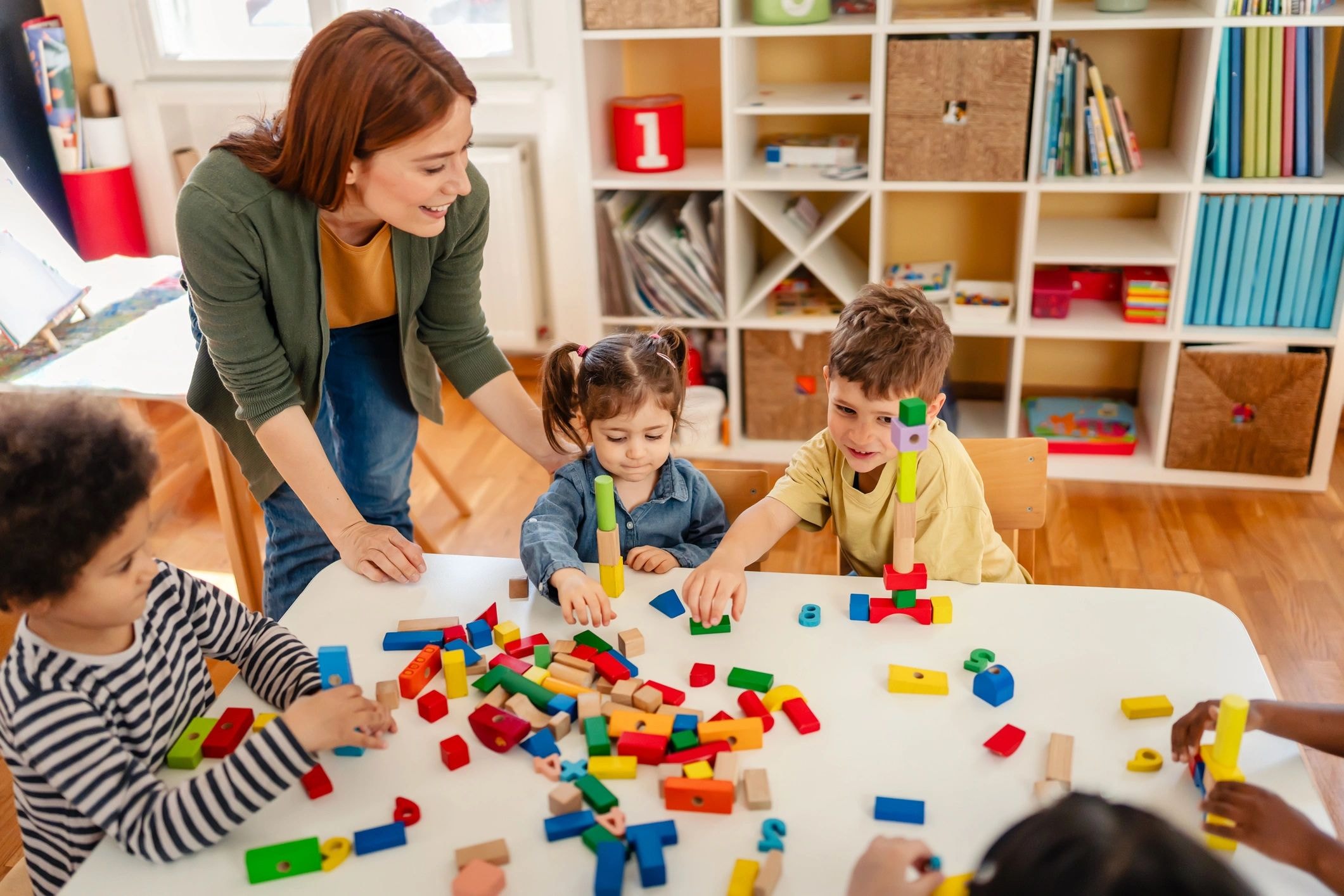
Building, designing, testing, spatial reasoning, persistence, construction, and age-appropriate design challenges. Children develop problem-solving skills through hands-on building experiences.
- Block building challenges
- Bridge-building
- Ramp & marble runs
- Recycled material builds
Art & Creativity
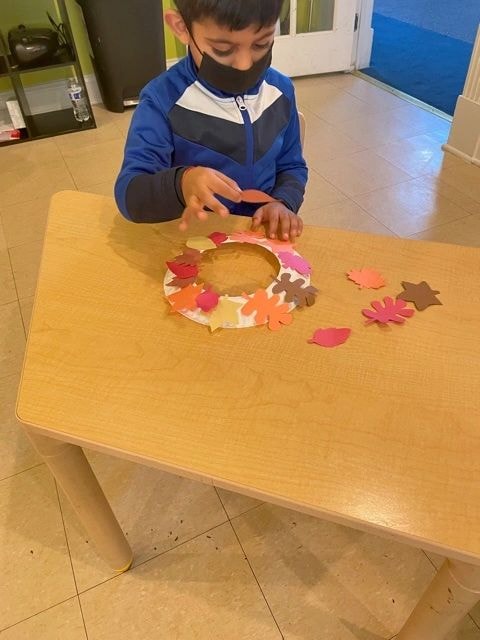
Painting, drawing, sculpture, collage, dramatic play, creative expression, open-ended materials, and imagination. Creative expression develops fine motor skills, emotional intelligence, and a love of making.
- Watercolor & mixed media
- Clay sculpting
- Dramatic play & puppetry
- Collage & printmaking
Mathematics
Counting, quantities, patterns, shapes, measurement, comparison, spatial reasoning, mathematical thinking, and hands-on problem-solving. Numbers and math concepts come alive through play and exploration.
- Counting & sorting games
- Pattern blocks
- Measurement activities
- Shape exploration
Music & Movement
Singing, rhythm, movement, dance, instruments where available, coordination, listening, and creative expression. Music and movement build phonological awareness, physical development, and joy.
- Rhythm & percussion
- Singing & call-and-response
- Movement & dance
- Instrument exploration
Nature & Outdoors
Nature observation, outdoor exploration, sensory experiences, physical activity, seasonal discovery, and environmental awareness. Time outdoors supports physical development, curiosity, and connection to the natural world.
- Bug & bird observation
- Outdoor sensory play
- Seasonal nature art
- Garden exploration
Literacy & Language
Conversation, vocabulary, read-alouds, storytelling, phonological awareness, phonics experiences as developmentally appropriate, early writing, books, listening, and communication.
- Phonological awareness
- Phonics experiences
- Storytelling & retelling
- Writing exploration
Social & Emotional Learning
Relationships, emotional vocabulary, self-regulation, cooperation, friendship, classroom community, communication, problem-solving, and age-appropriate conflict resolution — woven into every part of the day.
- Emotion identification
- Turn-taking and sharing
- Conflict-resolution language
- Friendship and community
Approach
How Children Learn at Curie
"Play and academics are not opposites in early childhood. Through thoughtfully planned play, exploration, conversation, and teacher-guided experiences, children build the language, mathematical thinking, self-regulation, curiosity, problem-solving, and social skills that support later academic learning."
Assessment
Understanding Each Child's Growth
Teachers learn about children's growth through observation, conversations, classroom participation, children's work, and other developmentally appropriate methods. This information helps teachers recognize individual strengths, emerging skills, interests, and areas where additional support or challenge may be helpful.
Teacher Observation
Teachers observe children during learning activities, play, and daily routines to understand how each child is growing and what they are ready to explore next.
Children's Work & Projects
Work samples, drawings, building projects, and other classroom creations show children's thinking, creativity, and developing skills over time.
Classroom Participation
How children engage in conversations, group activities, and learning centers gives teachers meaningful information about their development and interests.
Family Communication
Teachers communicate with families about children's development, classroom experiences, strengths, and emerging needs through the communication practices used by each program and campus.
Daily Rhythm
A Day at Curie
Daily rhythms vary by age group, classroom, and schedule option.
Doors open 8:00 am · Morning Half-Day dismissal 12:30 pm · Full Day closes 6:00 pm
Intentionally Small Classes
Classrooms are staffed in accordance with applicable Virginia licensing requirements. Families are welcome to ask about current classroom size and staffing during their tour.
Experienced Educators
Our educators meet applicable Virginia licensing and role qualification requirements and participate in ongoing professional development.
Quality
Quality & Continuous Improvement
Curie Preschool continually strengthens its educational programs through curriculum implementation, professional learning, classroom reflection, family partnership, quality-improvement practices, and schoolwide planning.
Virginia Licensed
Both Curie Preschool campuses are licensed Virginia child day centers.
VQB5 Participating
Both campuses participate in Virginia's VQB5 quality measurement and improvement system.
MSA Candidate
Curie Preschool is an official Candidate for Accreditation with the Middle States Association of Colleges and Schools.
STREAMin³ Implementation
Curie is implementing STREAMin³, research-based early childhood curriculum resources developed by the University of Virginia's CASTL, in applicable Early Preschool, Preschool, and Pre-Kindergarten classrooms to complement and strengthen Curie's STEAM++ Curriculum.
Professional Development
Curie's educators meet applicable Virginia licensing and role qualification requirements and participate in ongoing professional development.
Common Questions
See Learning in Action
Visit Curie Preschool to see how Curie's STEAM++ Curriculum, purposeful play, research-based resources, and intentional teaching come together in our classrooms.